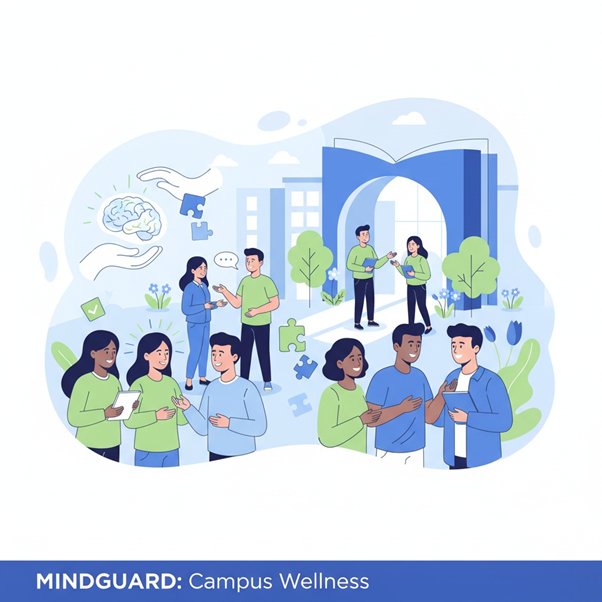
Facing Mental Health Challenges in Academia: How the MindGuard Project Supports Students and Staff

University life offers exciting opportunities for personal growth, knowledge, and new connections. However, it also brings significant challenges that can deeply impact mental health. Across Europe, students and academics alike face a wide range of psychological pressures, from anxiety, loneliness, and depression, to imposter syndrome, burnout, and even post-traumatic stress. These challenges not only affect personal well-being but also academic performance, career progression, and the ability to fully engage in university life.
For many students, the transition to higher education means coping with new environments, financial pressures, and the weight of expectations. Feelings of inadequacy, often described as imposter syndrome, are common, while loneliness and social isolation can intensify stress. Academics and faculty staff are also at risk: heavy workloads, research pressure, and administrative responsibilities often lead to exhaustion and burnout. Without effective support systems, these challenges can escalate into serious mental health issues.
Recent studies highlight the urgency of action. According to UNICEF (2021), over 9 million young people in Europe live with mental health disorders, while the OECD (2022) found that half of those in need report unmet access to support. Within universities in the Netherlands, Ireland, Cyprus, and Greece, more than 40% of students face significant mental health struggles, underlining the pressing need for innovative solutions.
This is where the MindGuard project comes in. Funded by Erasmus+, MindGuard introduces a participatory and digitally empowered mental health prevention framework for higher education. Its aim is to transform the way students, faculty, and staff learn about, understand, and respond to mental health issues.
The project develops three key innovations:
- A Guide for Educators and Staff – offering resources to implement effective Mental Health First Aid (MHFA) programmes within academic settings.
- An Interactive Training Programme – equipping faculty, staff, and students with practical skills to identify and respond to mental health challenges, fostering a culture of early intervention.
- A Virtual Reality (VR) Platform – delivering immersive and experiential learning experiences that simulate real-life scenarios such as anxiety crises, depression, or suicidal thoughts, enabling participants to practice supportive responses in a safe environment.
By combining education with digital innovation, MindGuard empowers students to become allies in supporting their peers, while also strengthening the capacity of academic staff to promote inclusion and wellbeing on campus. The project’s holistic approach also addresses stigma, encourages empathy, and creates peer-to-peer support networks, ensuring no one feels alone in their struggles.
In the long term, MindGuard envisions more resilient higher education communities where mental health is openly discussed, prevention is prioritized, and every student and academic feels supported. Through inclusive practices, cutting-edge technology, and participatory training, the project is helping to shape a healthier and more compassionate future for European universities.